
Why Is My Electric Bill So High in Utah? 11 Causes and the Fixes That Work in 2026
Most Utah bills climb for a reason you can find in ten minutes: more billing days, summer cooling, a new load, or usage spilling onto Rocky Mountain Power's pricier second tier. Find yours first. Then see whether rooftop solar is the right fix or the wrong one.
- 12.53¢ each summer kWh past 400
- ~45% of a central-air summer bill is cooling
- 6–10 p.m. weekday peak on the TOU plan

If you're searching “why is my electric bill so high Utah,” start with usage, not price. Rocky Mountain Power bills the first 400 kWh at one rate and every kWh after that about 27% higher, and summer rates run higher still. So extra cooling, an EV, a hot tub or a few extra billing days land on the most expensive kWh you buy. Our breakdown of Rocky Mountain Power's time-of-use plan shows when to shift heavy loads.
Rates are not the main story this year. The Public Service Commission approved a settlement on July 31, 2026, and Rocky Mountain Power can't put a new general rate case into effect before January 1, 2029. If your bill jumped while rates held fairly steady, something in the house changed, and that's what the tool below helps you find.
2026 Rocky Mountain Power Residential Rates at a Glance
| Schedule 1 | Jun–Sep | Oct–May |
|---|---|---|
| First 400 kWh | 9.8332¢ | 8.7020¢ |
| Every kWh after | 12.5263¢ | 11.0852¢ |
| TOU on-peak, 6–10 p.m. weekdays | 33.6173¢ | 29.7498¢ |
| TOU off-peak | 7.4705¢ | 6.6111¢ |
Base energy charges from Rocky Mountain Power's Utah Price Summary in effect September 25, 2026. Riders add about 13% to energy charges, plus a $12 monthly customer charge for a single-family home, before city and sales taxes.
Why Is My Electric Bill So High Utah? Run the Bill Detective
Take this month's bill and the same month from last year, both shown on the usage chart of your Rocky Mountain Power bill or in your online account. Enter the kWh and the billing days. The detective separates extra days from extra usage, shows how much landed on the upper tier, and rates how well solar fits.
Of the extra cost: days, usage.
Most likely causes, in order
- Usage per day went up.
Solar fit: GoodExplanation
Estimate only: base energy charges × about 12.9% in riders + the $12 customer charge, before city franchise and sales taxes. Last year's usage is priced at 2026 rates so the comparison shows usage, not rate changes. Time-of-use bills are priced differently.
Send a Photo of Your Bill. We'll Tell You If Solar Makes Sense.
It's the quickest honest answer to why is my electric bill so high Utah homeowners can get. Snap the page with the 13-month usage chart and attach it to the form; it accepts photos. Rebecca calls back within one business day, and our electricians use your real usage to size a system, or tell you a repair or a setting change will do more for less.
- Sized to your actual kWh, not a neighbor's
- Preliminary price in about 24 hours
- $150 site survey, waived if you go ahead
Bill review request
11 Reasons Your Utah Electric Bill Is So High, and Which Ones Solar Fixes
Each card shows how often solar is the answer. Green means solar fits that cause well, amber means partly, grey means fix the cause first.
More days on this bill
Billing periods drift. A 34-day bill against last year's 29-day bill is about 17% more usage before anything in the house changed. Divide kWh by days before you panic.
Solar fit: not the issueSummer cooling on the upper tier
Rocky Mountain Power says about 45% of a summer bill goes to cooling a home with central air, and summer usage can run three to four times other months. All of it is billed at June–September prices.
Solar fit: strongCrossing 400 kWh
The first 400 kWh is the cheap block. Every kWh after it costs about 27% more, so a usage increase always lands on the most expensive part of the bill.
Solar fit: strongElectric heat in winter
Electric furnaces, heat pumps on backup heat strips, baseboard and plug-in space heaters can push a January bill past a July one. Panels make the least power in exactly these months.
Solar fit: partialA new electric vehicle
A daily commute adds hundreds of kWh a month, all on the upper tier. Rocky Mountain Power suggests setting the car to start charging at 10 p.m.
Solar fit: strong with a charging scheduleTime-of-use plan, evening habits
On the TOU option, a kWh used from 6 to 10 p.m. on a weekday costs about 4.5 times an off-peak kWh. Dinner, laundry and a plugged-in car in that window can sink the plan.
Solar fit: needs a batteryHot tub, pool or spa
Heaters and pumps run every day. Rocky Mountain Power recommends variable-speed pool pumps and clean intake grates; we also check hot tub wiring and timers.
Solar fit: strong for daytime pumpsEquipment that's failing
A water heater element that never shuts off, an AC low on refrigerant or a well pump short-cycling uses power with nothing to show for it. A per-day jump with no new loads points here.
Solar fit: repair firstHeat tape and block heaters
Rocky Mountain Power lists heat tape, engine block heaters, heat lamps and water trough heaters as common winter bill-raisers. They're easy to forget once they're plugged in.
Solar fit: timers firstMore people, more hours home
House guests, a new baby, or a switch to remote work adds cooking, laundry, screens and daytime cooling. The usage is real and tends to stay.
Solar fit: good for daytime useRate riders and adjustments
Riders such as the energy balancing account and a temporary rate case deferral adjust energy charges by percentages. They shift, but they explain far less of a jump than usage does.
Solar fit: steadies costsWhy the 401st kWh Makes a Utah Electric Bill So High
Picture two tanks. The first holds 400 kWh at the lower price. Once it's full, every kWh spills into the second tank at the higher price. A household using 1,250 kWh in July buys 850 kWh from the expensive tank. That's why a modest-sounding change, like an extra hour of cooling each afternoon, shows up so loudly on the bill.
It's also why solar pays back best for exactly these homes. The kWh a solar array replaces come off the top of the second tank first, at about 14.1¢ each in summer once riders are included. A kWh you send back to the grid earns 4.855¢ in summer and 4.033¢ the rest of the year under Schedule 137, so a well-sized system aims to be used at home, not exported. Our net metering guide for Utah walks through those credits.
When Solar Fixes a High Electric Bill in Utah, and When It Won't
Solar is a strong answer to steady, daytime, summer-heavy usage. It's a weak answer to a broken water heater. Here's how we sort it before anyone talks about panels.
| What's driving your bill | Does solar help? | Do this first |
|---|---|---|
| Summer cooling, upper-tier kWh | Yes, strongly — panels peak in the same months | Size the array to your summer usage and keep exports low |
| EV charging | Yes, if charging is scheduled | Set a charging schedule; check your panel for a 240-volt circuit |
| Evening use on the TOU plan | Only with a battery | Shift loads out of 6–10 p.m. or add storage |
| Winter electric heat | Partly — winter output is lowest | Have the heating system checked; heat pump settings matter |
| Failing equipment | No — you'd be powering a fault | Repair the water heater, AC or pump |
| Extra billing days | Not the problem | Compare usage per day |

What a system costs matters as much as what it saves. EnergySage's 2026 local data puts Utah installs at roughly $2.28 to $2.66 per watt, and the 30% federal homeowner credit ended for systems finished after December 31, 2025. That's why we size to the kWh you actually buy on the upper tier rather than the biggest roof we can fill. See current numbers on solar panel cost in Utah, and our solar panel installation Utah page for how a project runs.
“Ever since i got my Solar system installed, my power bills are down to just the metering fee.”
Is Your High-Bill Season a Solar Season?
Pick the pattern that looks like your 13-month usage chart and a system size. The bars show your usage by month; the yellow line shows what a south-facing Utah array typically makes. Where the line covers the bar, solar replaces upper-tier kWh. Where it falls short, that season needs another fix.
Solar covers most of the summer peak.
Usage patterns and the monthly solar shape are illustrative; annual output uses about 1,482 kWh per kW per year. Your own design depends on roof direction, shade and tilt.
p.m.
Weekday on-peak, all year
The 6-to-10 p.m. Problem Solar Panels Can't Solve Alone
The sun is setting just as Utah homes cook, run laundry and plug in cars. On the time-of-use option, those four weekday hours cost 33.6¢ per kWh in summer before riders, against 7.5¢ off-peak, and the plan has a one-year minimum. Panels can't cover that window. A battery charged by your panels during the day can.
Rocky Mountain Power's Wattsmart program pays $1,000 or $2,000 for batteries on its approved list, based on the size of a single battery. We install Tesla Powerwall, Sigenergy and Enphase storage; the Wattsmart battery rebate page shows which qualify, and adding a battery to existing solar covers homes that already have panels.


Rule These Out Before You Spend a Dollar
- Count the days. The billing days are printed with your service address. Compare kWh per day, not per bill.
- Look at the hourly view. Upgraded meters show daily and hourly usage in your online account. A flat overnight floor that jumped points to something running nonstop.
- Flip breakers for an hour. With the meter showing live use, switch off one big circuit at a time, like the water heater, hot tub or well pump, and watch what drops.
- Ask about the meter last. Rocky Mountain Power tests a meter for accuracy once every 12 months at no charge, $60 for each extra test, and a meter more than 2% fast counts as overbilling. Call 1-888-221-7070.
- Call an electrician for the rest. A tripping breaker, a warm panel or a load you can't identify needs a licensed electrician, not a solar quote.
Most of the time, the answer is on the bill itself. When it isn't, our service crews trace the circuit. Older homes often show it in the panel first; see electrical panel upgrades in Sandy, UT. If an EV is the new load, our EV charger installation cost guide explains a scheduled Level 2 setup, and the lower Rocky Mountain Power bill guide compares the tiered and time-of-use plans in depth.


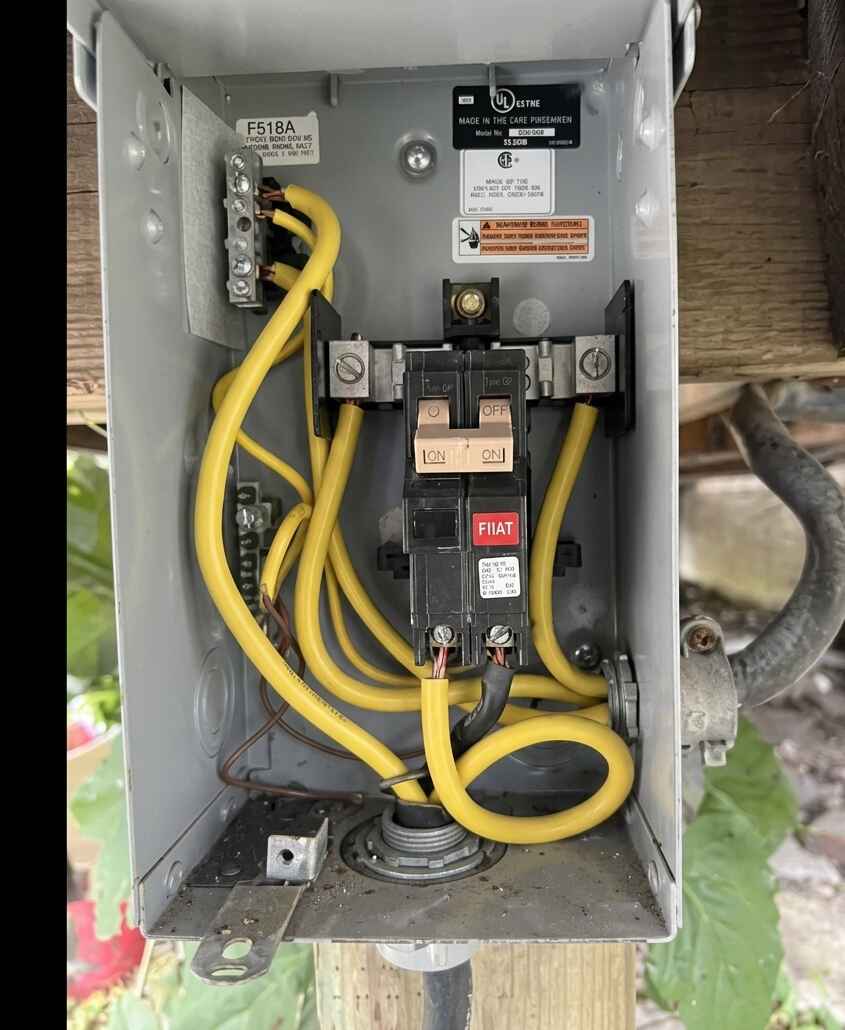

What We Look at Before We Quote Solar
A solar price built on a guess at your usage is a guess. We start from 12 months of your Rocky Mountain Power usage, then look at the panel, the roof, shade, and the big loads behind the bill. Christian and Jason Grimes, our DOPL licensed Master Electrician, build the preliminary price, and Tyler Gordon, owner and operator, is available for a call before you decide.
- Usage by month and upper-tier kWh
- Panel capacity for solar, battery and EV
- Roof direction, age and shade
- Loads worth fixing before sizing
We serve Salt Lake, Utah, Davis, Weber, Tooele and Wasatch counties from our Sandy, UT office. If your city runs its own power company, like Murray or Provo, the rates above don't apply, and we'll size against your utility's bill instead.
What Utah Homeowners Said After Their Power Bills Changed
5.0 stars across 54 Google reviews and an A+ rating on BBB.
“Cole was great to work with and spec'd out a system to meet our needs. Install went smoothly.”
“Got a large solar system and batteries from these guys. They were great and I'll be using them for all my electrical work in the future.”
“Awesome service, super professional & honest! Will use again in the future”
Panels and Batteries Our Crews Installed This Year
Tap any photo to enlarge it. More finished jobs are in our project gallery, and storage options are on home energy storage in Utah.
Turn a High Utah Electric Bill Into a Solar Plan That Fits
Send your address and the usage page of your bill, or attach photos of your panel and roof. We'll reply in writing with what's driving the bill, whether solar, a battery or a repair makes the biggest difference, and a preliminary price if solar fits.
- Bill with usage chart
- Panel photo
- Roof photo
- EV or hot tub details
Solar and bill review
Why Is My Electric Bill So High Utah FAQ
Why is my electric bill so high all of a sudden?
Compare kWh per day with the same month last year. If daily use rose, look for cooling or heating, a new EV, a hot tub, extra people home or failing equipment. If it didn't, the difference is usually extra billing days or season.
Why is my Rocky Mountain Power bill so high in summer?
June through September carries higher energy rates, and Rocky Mountain Power estimates about 45% of a summer bill goes to cooling a home with central air. Most of that use lands above the first 400 kWh, where each kWh costs more.
Why is my winter electric bill higher than my summer bill?
That usually means electric heat: an electric furnace, heat pump backup strips, baseboard or plug-in space heaters, or heat tape. Have the heating system checked before sizing solar, because panels produce the least in winter.
How much does 1,000 kWh cost on Rocky Mountain Power in 2026?
About $141 in summer and about $126 in winter on the standard residential schedule, including riders and the $12 customer charge but before city and sales taxes.
Can a bad meter cause a high electric bill?
It's rare. Rocky Mountain Power will test your meter for accuracy once every 12 months at no charge, and a meter running more than 2% fast is treated as overbilling.
Will solar get rid of my electric bill in Utah?
Not entirely. The customer charge stays, and exports earn far less than the kWh you buy. A well-sized system can cover most upper-tier kWh, which is where a high bill comes from.
Is solar worth it for a high electric bill in Utah?
It's strongest when the high bill comes from steady daytime or summer use. If the cause is failing equipment or winter heating, fix that first; our bill review tells you which applies.
Does the time-of-use plan lower a high bill?
Only if you can keep weekday use out of 6 to 10 p.m. On-peak kWh cost about 4.5 times off-peak, and you stay on the plan for at least a year.
What uses the most electricity in a Utah home?
Cooling in summer and electric heat in winter, followed by EV charging, electric water heaters, and hot tubs or pools.
How do I get my bill reviewed by Elite Electric?
Call +1 (801) 928-7219 or send the form with a photo of your bill's usage chart. Rebecca calls back within one business day.
Find the cause. Then fix the bill for good.
Send us the usage page of your Rocky Mountain Power bill. We'll show you what's driving it and what solar would replace.
+1 (801) 928-7219